ServicesCrowns & Bridges
Crowns & Bridges in Millbury
A crown covers a tooth that is cracked, worn down or holding a large old filling. A bridge fills the space where a tooth is missing. We show you what we see, explain the material choices in plain words and help you pick the one that fits your bite.
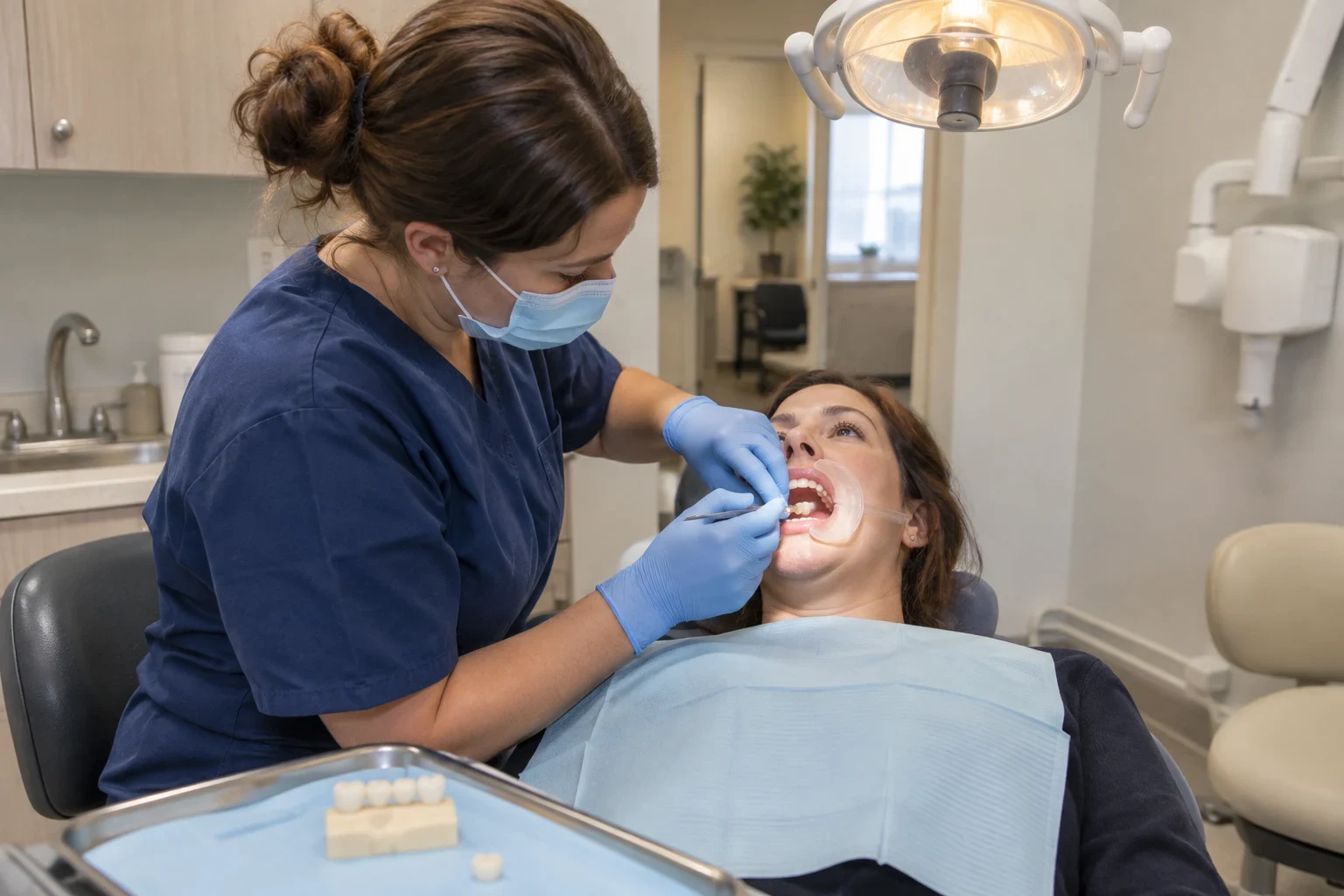
When a Crown or Bridge Is the Right Call
Some teeth are past what a filling can hold. If more than about half the tooth is filling, or a crack runs down the side, chewing can split it. A crown wraps the whole tooth and holds it together so you can bite down without worrying.
A bridge is for a gap. It uses the teeth on either side as anchors and holds a replacement tooth between them. That keeps the neighbors from tipping into the space and keeps your bite even.
The material matters more than most people expect. Zirconia, porcelain and gold each wear, look and hold up differently. We explain the trade-offs at the chair so the choice is yours, not a sales pitch.
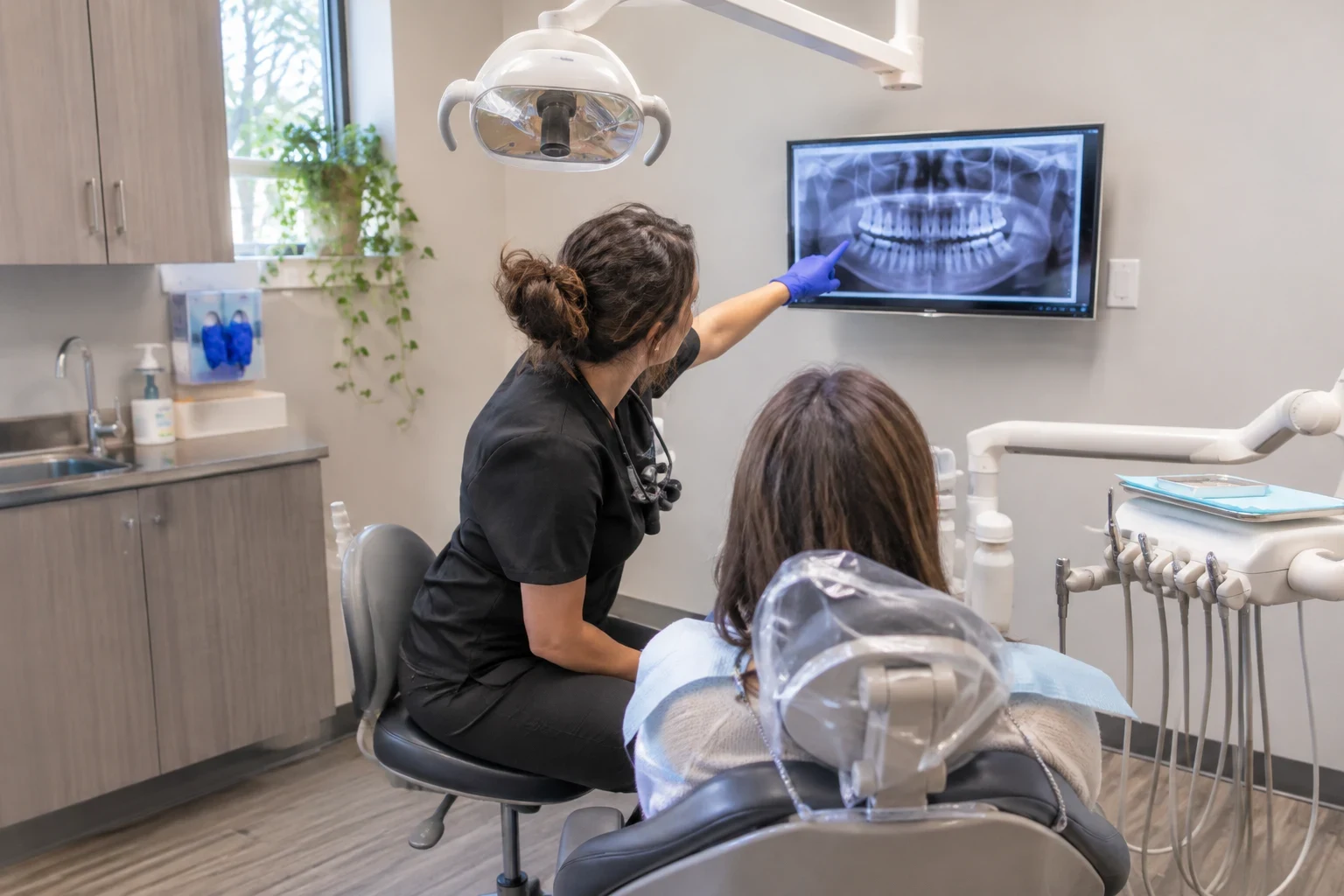
Crown and Bridge Material Options
- 01
Zirconia
Very strong and hard to chip, which makes it a good fit for back teeth and people who grind. Newer layered zirconia looks natural enough for many front teeth too.
- 02
All-ceramic porcelain
The most lifelike color and shine, so it is our usual pick for front teeth. It is a bit less forgiving under heavy grinding than zirconia.
- 03
Porcelain fused to metal
A metal shell with porcelain on top. It has a long track record and works well for bridges. Over the years a thin gray line can show at the gumline.
- 04
Gold
Gold is gentle on the teeth it bites against and needs the least tooth trimmed away. It does not match your smile, so it mostly goes on back molars.
- 05
Temporary crown and fit check
While your final crown is being made, you wear a temporary one. When the final piece is ready, we check the bite and the edges before we cement it.
Questions about Crowns & Bridges?
Call(508) 466-6991Signs a Tooth May Need a Crown or Bridge
Pain when you bite down
A sharp jolt on release, or pain only on one spot, often means a crack. A crown can hold the pieces together before the crack spreads.
A big, old filling
Large silver fillings from years back can flex the tooth around them. When the walls start to chip, a crown is usually the sturdier fix.
A broken or worn-down tooth
If a chunk breaks off or grinding has flattened your teeth, there may not be enough left to bond a filling to.
A gap from a missing tooth
Teeth next to a gap slowly lean in. A bridge holds the space and gives you something to chew on again.
An old crown that has changed
A dark line at the gum, a loose feel or food catching under the edge are worth a look. Decay can start under an old crown without much pain.
How Your Crown or Bridge Visits Go
- 1
Exam and talk
We take X-rays, look at the tooth and show you what we found. Then we go over which options make sense for that spot and why.
- 2
Shaping the tooth
We numb the area so you stay comfortable. We shape the tooth, take an impression or scan and match the shade to your other teeth.
- 3
Temporary crown
You leave with a temporary crown or bridge. Chew on the other side and skip sticky foods until the final one is in.
- 4
Fitting the final piece
At the second visit we remove the temporary, try in the final crown or bridge and check your bite. Once it feels right, we cement it in place.
What Moves the Cost of a Crown or Bridge
Every tooth is different, so we give you a written treatment plan before we start. You will see what each part costs and what your insurance is likely to cover. We accept most dental insurance plans, and patients without insurance can ask about our Office Dental Plan.
- Material you choose
- Zirconia, all-ceramic, porcelain fused to metal and gold are priced differently. Gold also moves with metal prices.
- Crown or bridge size
- A single crown costs less than a bridge. A three-unit bridge is priced as three teeth, and longer bridges add more.
- What is under the old filling
- If decay runs deep or there is little tooth left, we may need to rebuild the core first. We tell you before we do it.
- Insurance and payment
- Many plans cover part of a crown when it is needed for function. We also offer the CareCredit Patient Payment Plan if you want to spread the cost out.
Crown and Bridge Questions
How long does a crown last?
It depends on what it is made of, your bite and how you care for it. Grinding, chewing ice and skipped cleanings shorten its life. Regular exams and cleanings let us catch wear early.
Does getting a crown hurt?
We numb the tooth fully before we start, so most patients feel pressure, not pain. The gum can be sore for a day or two. Over-the-counter pain relief usually handles it.
Which material is best for a back tooth?
For most back teeth we lean toward zirconia or gold because they handle heavy chewing. If you grind at night, that matters even more. We will show you the options for your bite.
Should I get a bridge after a tooth is pulled?
Often yes, once the gum has healed. A bridge keeps the nearby teeth from drifting. If you need the tooth removed first, our Extractions page explains that visit.
Can a crown be whitened later?
No. Crowns keep the shade they are made in. If you want brighter teeth, do Teeth Whitening first and we match the crown to the new shade.
Get That Tooth Looked At
Tell us which tooth is bothering you and we will set a time to look at it. You will leave knowing your choices and what each one costs.