ServicesFillings
Tooth Fillings in Millbury
A cavity is a small hole now and a bigger one later. We clean out the decay, seal the tooth and tell you plainly which filling material suits that spot. You leave numb for a bit, then chew like normal.
What a filling does and when it's the right fix
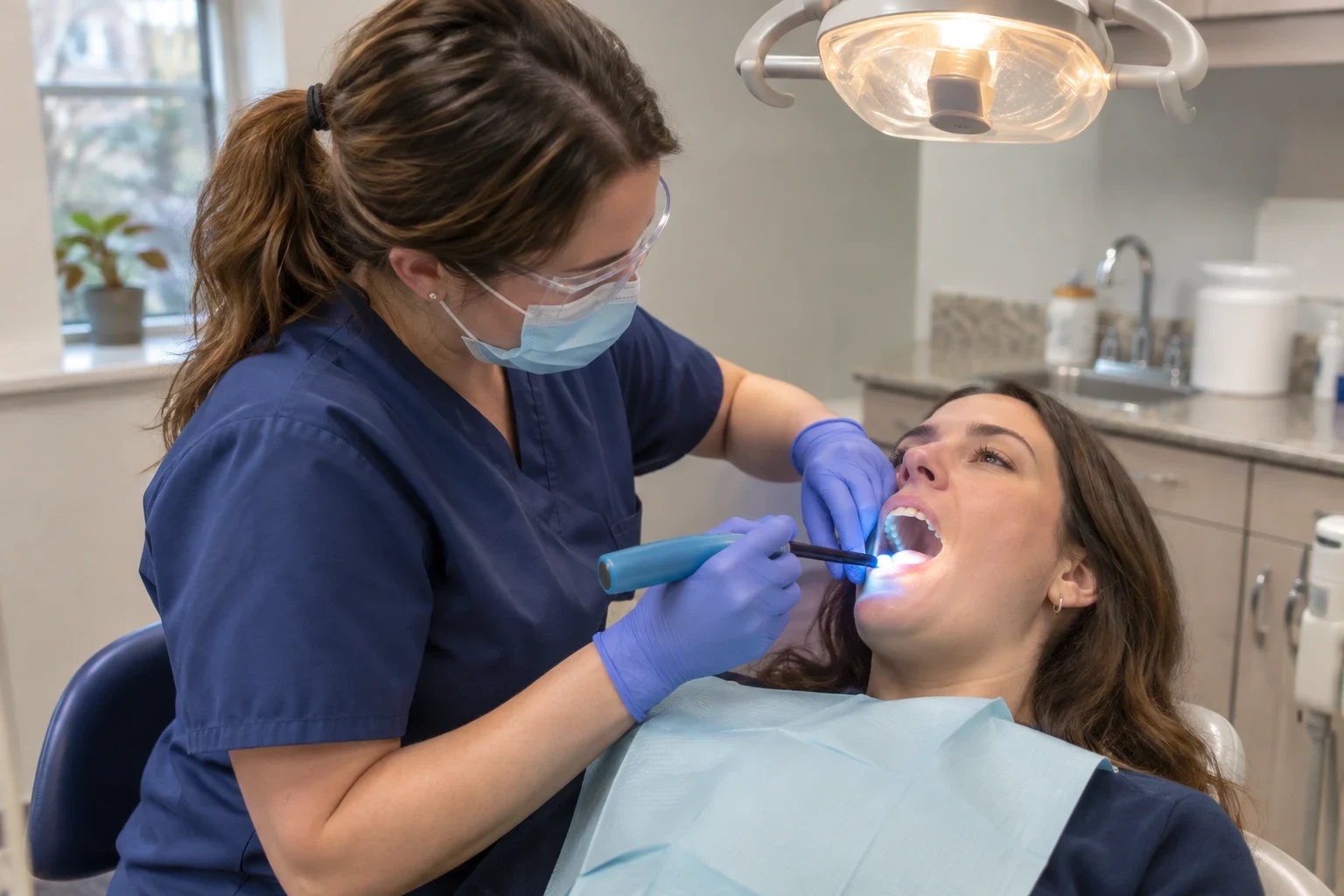
A filling replaces the part of a tooth that decay has eaten away. We remove the soft, damaged spot, then rebuild the tooth so it seals out bacteria and handles chewing again. It's the right call when the damage is small to medium and enough healthy tooth is left around it.
What goes into the tooth matters more than most people think. Tooth-colored composite bonds to the tooth and blends in. Glass ionomer releases a little fluoride and works well near the gumline. Silver amalgam is what many older fillings are made of. Each one wears, looks and holds up differently, so we explain the trade-offs before we start.
When a cavity is too big for a filling to hold, we'll say so. A crown may be the better answer then, and you can read about that on our Crowns & Bridges page.
What your filling visit includes
- A close look first
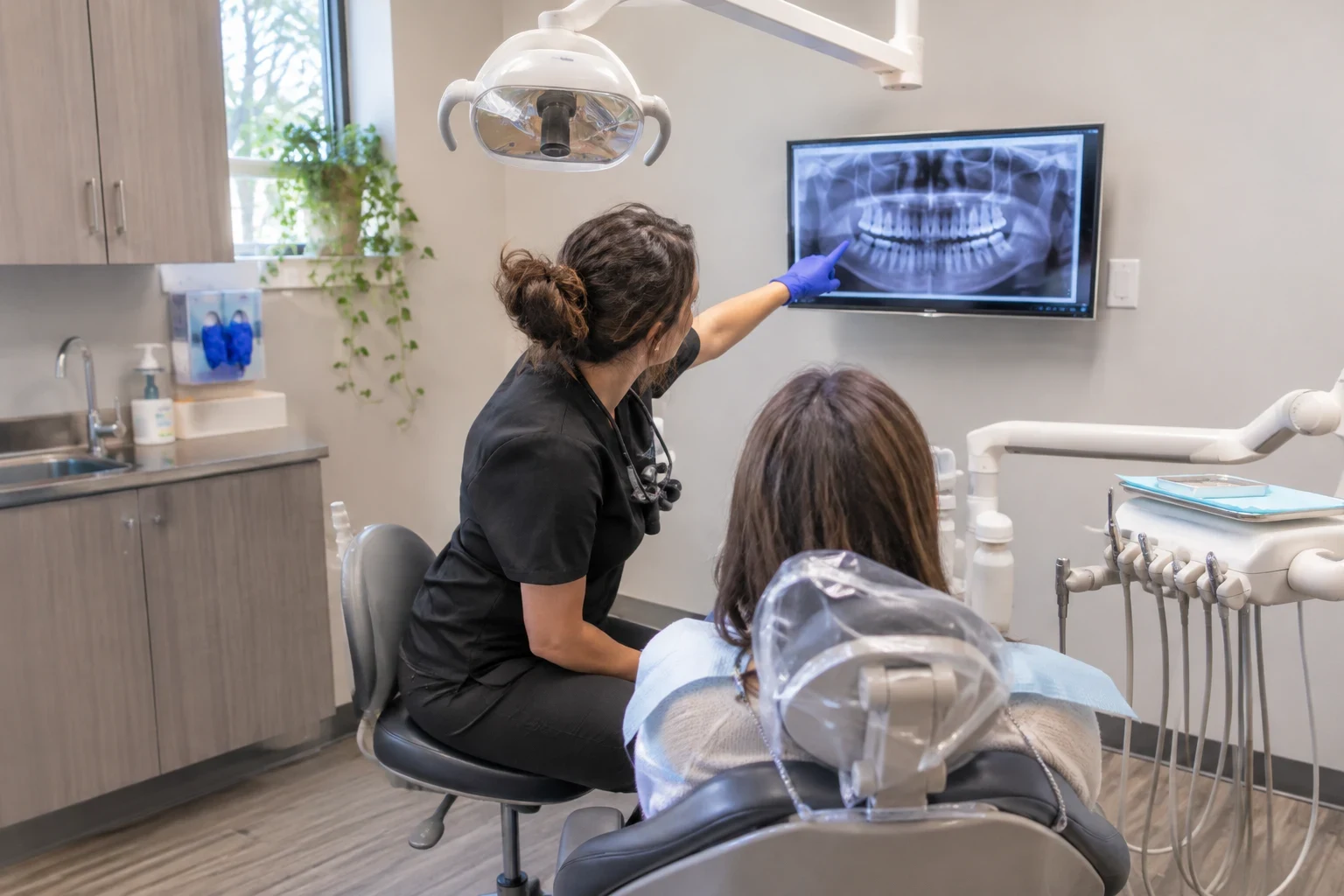
- We check the tooth and take an X-ray if we need to see how deep the decay goes. That tells us whether a filling will do the job.
- A material talk, in plain words
- We go over the options for that tooth and tell you which one we'd pick and why. A front tooth and a back molar often need different answers.
- Numbing that's done slowly
- We numb the area gently and wait until it takes. If you still feel something, tell us and we stop.
- Decay removed, tooth rebuilt
- We take out only the damaged part and keep as much healthy tooth as we can. Then we place the filling in thin layers and harden each one.
- A bite check before you go
- We have you bite down and adjust any high spot. A filling that sits even a little too high can make the tooth sore for days.
Signs a tooth may need a filling
A twinge with cold or sweets
A short, sharp zing when you drink something cold or eat candy often means the enamel has a weak spot.
Pain when you bite
If one tooth hurts when you chew, decay or a cracked filling may be letting pressure reach the nerve.
A dark spot or a hole
Brown, gray or black spots on the chewing surface are worth a look. So is a pit your tongue keeps finding.
Food keeps catching
Floss that shreds or food that packs into the same gap can point to a cavity between teeth.
An old filling that's breaking down
Chipped edges, a dark line around an old silver filling, or a piece that fell out all mean the seal is gone and decay can get underneath.
How the appointment runs
- 1
Check and plan
We look at the tooth, confirm the cavity and agree with you on what the filling will be made of. No surprises once the drilling starts.
- 2
Numb and clean out
After the area is numb, we remove the decay and shape the space so the filling has something solid to hold onto.
- 3
Place and harden
Composite goes in layer by layer, and a blue light sets each one in seconds. Glass ionomer sets on its own. We shape it to match how your teeth meet.
- 4
Polish and go
We smooth the surface, check your bite and send you on your way. Most people go back to their day right after, just a bit numb for a few hours.
What moves the cost of a filling
Every filling is priced by the tooth, so we give you the cost once we've seen it. We accept most dental insurance plans, and we'll go over what your plan is likely to cover. If you don't have insurance, ask about our Office Dental Plan for patients without insurance, or the CareCredit Patient Payment Plan.
- Size of the cavity
- A small pit on one surface takes less time and less filling than decay that wraps around two or three sides of a tooth.
- The material you choose
- Composite takes more time to place than older options because it goes in layers and must stay dry. Some insurance plans pay a different amount for tooth-colored fillings on back teeth.
- Which tooth it is
- Back molars are harder to reach and keep dry. Front teeth need careful shading so the filling doesn't show.
- Replacing an old filling
- Taking out an old filling and any decay under it adds work. Sometimes we find more damage than the X-ray showed, and we'll tell you before going further.
Questions about fillings
Something not covered here? (508) 466-6991
Will getting a filling hurt?
Most people feel a pinch from the numbing and pressure after that, not pain. We test the area before we start. If anything feels sharp, raise your hand and we stop and add more numbing.
Should I replace my old silver fillings?
Not just because they're silver. If they're intact and sealed, they can stay. We suggest replacing one when it's cracked, leaking at the edges or the tooth around it is starting to split. We'll show you what we see so you can decide.
Which type of filling lasts longest?
It depends on the tooth and your habits. Amalgam is very tough on back teeth but doesn't match the tooth. Composite looks natural and bonds well but can wear or stain over time, especially if you grind. Glass ionomer is softer, so we use it where chewing pressure is low.
When can I eat after a filling?
With composite, the filling is hard before you leave. Wait until the numbness wears off so you don't bite your cheek or tongue. Some soreness for a day or two is normal, and it should fade.
Do you fill baby teeth?
Yes. Baby teeth hold space for adult teeth, and a cavity left alone can cause pain or infection. Our Kids' Dentistry page covers how we make visits easy for young patients.
Get that tooth looked at before it grows
Small cavities are quicker and simpler to fix than big ones. Patients come to us from Millbury, Sutton, Grafton and Auburn, and we'll find a time that works for you.