ServicesInvisalign / Clear Aligners
Invisalign and Clear Aligners in Millbury
Clear aligners straighten teeth with a series of thin plastic trays you swap every week or two. We check whether they fit your bite, explain the trays, attachments and retainers in plain words, and give you a treatment plan before anything starts.
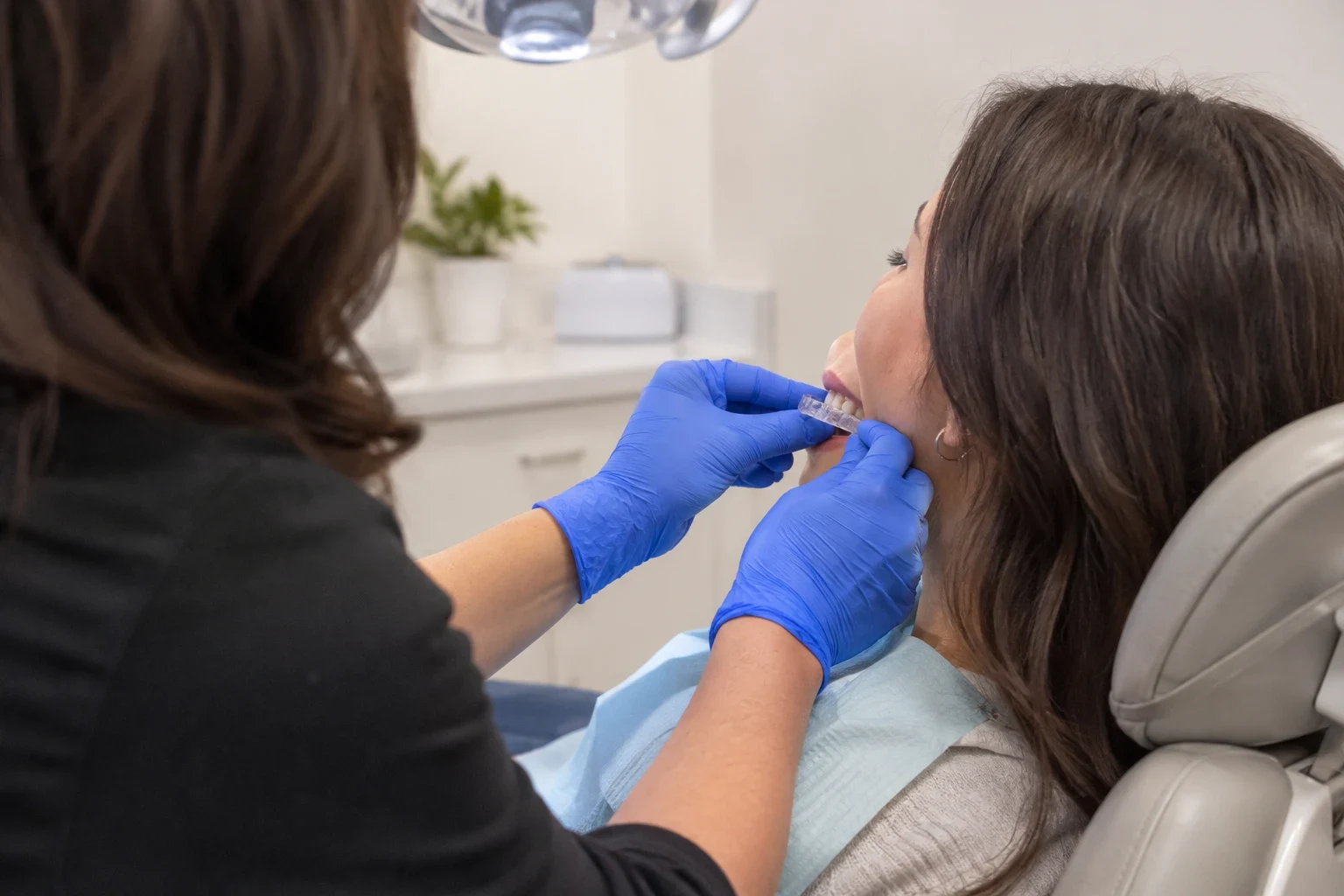
What clear aligners are and when they make sense
An aligner is a thin, clear tray made from a flexible medical-grade plastic. Each tray is shaped a little differently from the last one. Wear it, and it presses your teeth a small step toward where they should be. Swap to the next tray, and the teeth take another step.
They work well for crowding, gaps, teeth that have drifted since braces years ago, and many mild to moderate bite problems. They are a harder fit for large jaw-size differences or teeth that need to move a long way up or down. We tell you which group you are in at the first visit.
The trade-off is simple. Aligners are close to invisible and come out for meals and brushing. That also means they only work when they are in. If you can keep them in most of the day, they do the job.
What your aligner treatment includes
- Exam and bite check
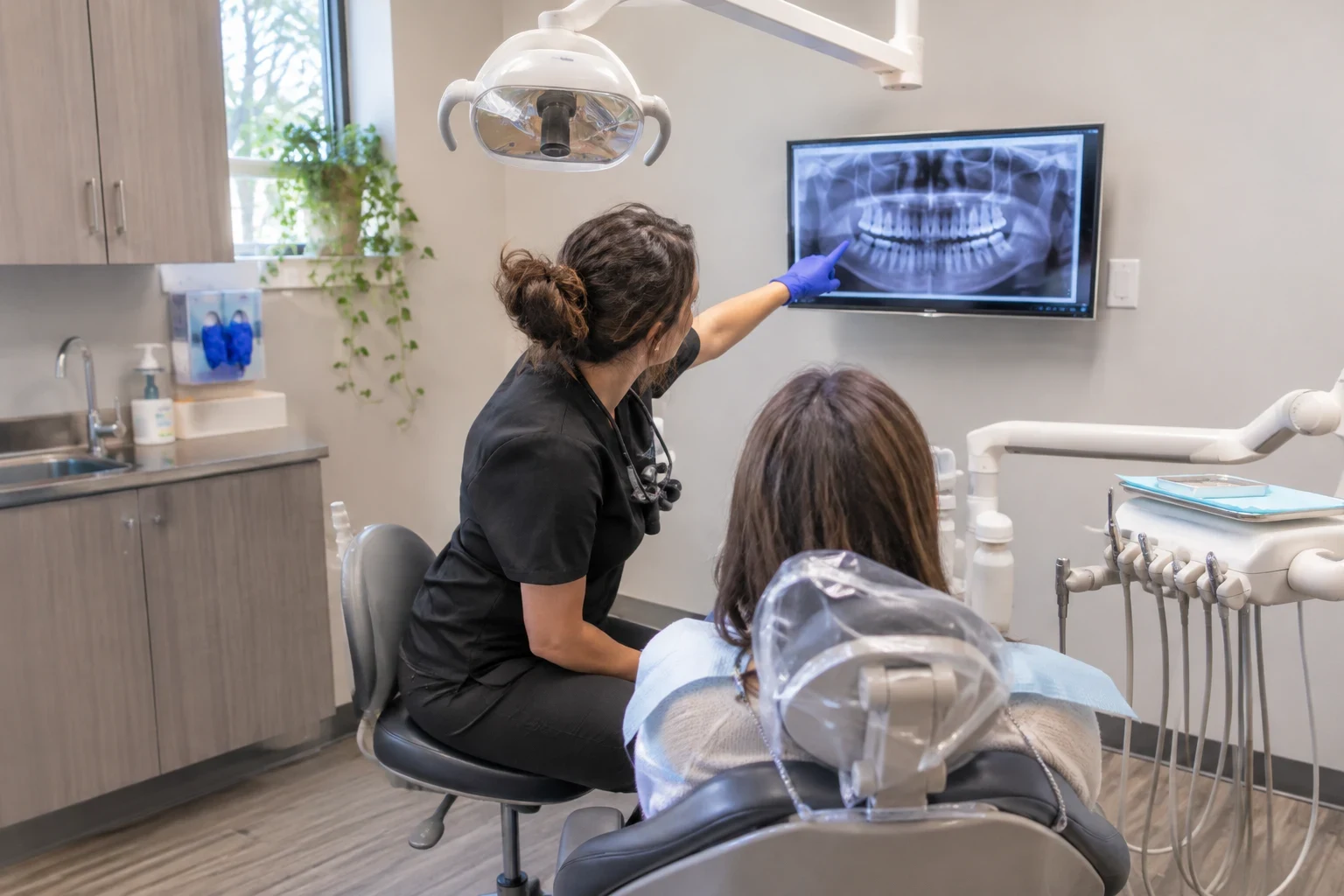
- We look at your teeth, gums and bite, and take X-rays if we need them. Cavities or gum trouble get handled first, since trays fit over the teeth and can trap problems underneath.
- Scan or impressions and a digital plan
- We record the shape of your teeth and build a step-by-step plan of how each one will move. You see the planned end result before you commit.
- The tray set
- Your trays are made from clear thermoplastic, thin enough to talk through after a day or two. The plastic is firm enough to push teeth but will warp in hot water and pick up stains from coffee, tea or red wine if you drink with trays in.
- Attachments when needed
- Attachments are small bumps of tooth-colored composite, the same material used in white fillings, set onto a few teeth with dental adhesive. They give the plastic something to grip so it can turn or lift a tooth. We polish them off at the end.
- Small reshaping between teeth
- Sometimes we smooth a sliver of enamel between tight teeth to make room. It is a light polish, not drilling, and we only do it where the plan calls for it.
- Retainers to hold the result
- Teeth drift back without a retainer. We go over the choices: clear plastic retainers, a thin fixed wire glued behind the front teeth, or a classic acrylic and wire retainer.
Signs clear aligners could help you
Crowded or overlapping teeth
Teeth that overlap trap food and plaque. Straightening them makes brushing and flossing easier and can cut down on cavities between teeth.
Gaps that keep catching food
Spaces between teeth can often be closed with trays alone, sometimes with a few attachments for grip.
Your teeth moved after braces
Lots of adults wore braces as kids and stopped wearing the retainer. A short aligner series often brings the front teeth back in line.
Uneven wear or chipped edges
When teeth meet at odd angles, edges wear down or chip. Fixing the alignment can take that pressure off before you need crowns or bonding.
You want to avoid metal braces
If brackets and wires are the reason you have put this off, clear trays are worth a look. We will be straight with you if braces would do a better job.
How it goes, visit by visit
- 1
Consult and exam
We check your teeth and bite and talk about what bothers you. If aligners are a fit, we explain the materials and how long the plan might take.
- 2
Records and plan
We take a scan or impressions and photos. Then we walk you through the digital plan and answer questions before your trays are ordered.
- 3
Fitting day
We bond any attachments, which takes about as long as a cleaning and needs no numbing. You get your first trays, learn how to put them in and take them out, and go home with the next few sets.
- 4
Check-ins
You come back every several weeks so we can check fit and tracking. If a tooth lags behind, we may order a round of refinement trays.
- 5
Finish and retainers
We polish off attachments, take final records and fit your retainer. From here, the retainer does the work of keeping your smile in place.
What moves the cost of clear aligners
Aligner pricing depends on how far your teeth need to move and what has to happen before and after. We give you the number once we have seen your teeth and built the plan. We accept most dental insurance plans, offer an Office Dental Plan for patients without insurance, and work with CareCredit Patient Payment Plan financing.
- Length of treatment
- A short plan for a few front teeth uses fewer trays than a full-mouth plan that also corrects the bite. More trays and more visits mean a higher cost.
- Refinement trays
- Some teeth need a second round of trays to finish. We tell you up front how refinements are handled in your plan.
- Work needed first
- Cavities, gum inflammation or a tooth that needs to come out must be dealt with before trays go on. Those visits are separate from the aligner plan.
- Retainer choice
- Clear plastic retainers wear out and get replaced over the years. A fixed wire glued behind the front teeth lasts longer but needs careful flossing. The type you pick changes the long-term cost.
- Your insurance
- Some plans include orthodontic coverage and some do not. Bring your plan details and we will help you see what applies.
Clear aligner questions we hear often
Something not covered here? (508) 466-6991
How many hours a day do I have to wear them?
Most plans call for about 20 to 22 hours a day. Take them out to eat and drink anything but plain water, then brush and put them back in. Leaving them out for long stretches is the most common reason a plan runs behind.
Do aligners hurt?
Each new tray feels snug for a day or two. Most patients describe it as pressure, not pain. Switching to a new tray at bedtime helps you sleep through the tightest part.
Can I drink coffee with my trays in?
It is better not to. The plastic stains, and hot drinks can soften and warp it. Sugary drinks also sit against your teeth under the tray, which raises cavity risk.
What happens if I lose or crack a tray?
Give us a call. Often we have you move to the next tray or go back to the last one while a replacement is made. Do not just skip ahead several trays on your own.
Will I have to wear a retainer forever?
To keep the result, yes, in some form. Most patients wear a removable retainer every night after treatment. A thin fixed wire glued behind the front teeth is another option if you would rather not think about it.
Are aligners an option for teenagers?
Often, yes, once enough adult teeth are in. The bigger question is whether they will wear the trays as directed. We look at both at the consult and talk it over with you and your teen.
Find out if aligners fit your smile
At your first visit we check your bite, show you the trays and attachments up close, and tell you plainly whether aligners or another option makes more sense. Patients come to us from Millbury, Worcester, Grafton and nearby towns.