ServicesExtractions
Gentle Tooth Extractions in Millbury
Some teeth can't be saved. If yours is split, badly decayed or stuck under the gum, we remove it with full numbing and a steady hand. You will know ahead of time how it comes out, how the spot heals and what could go in the space later.
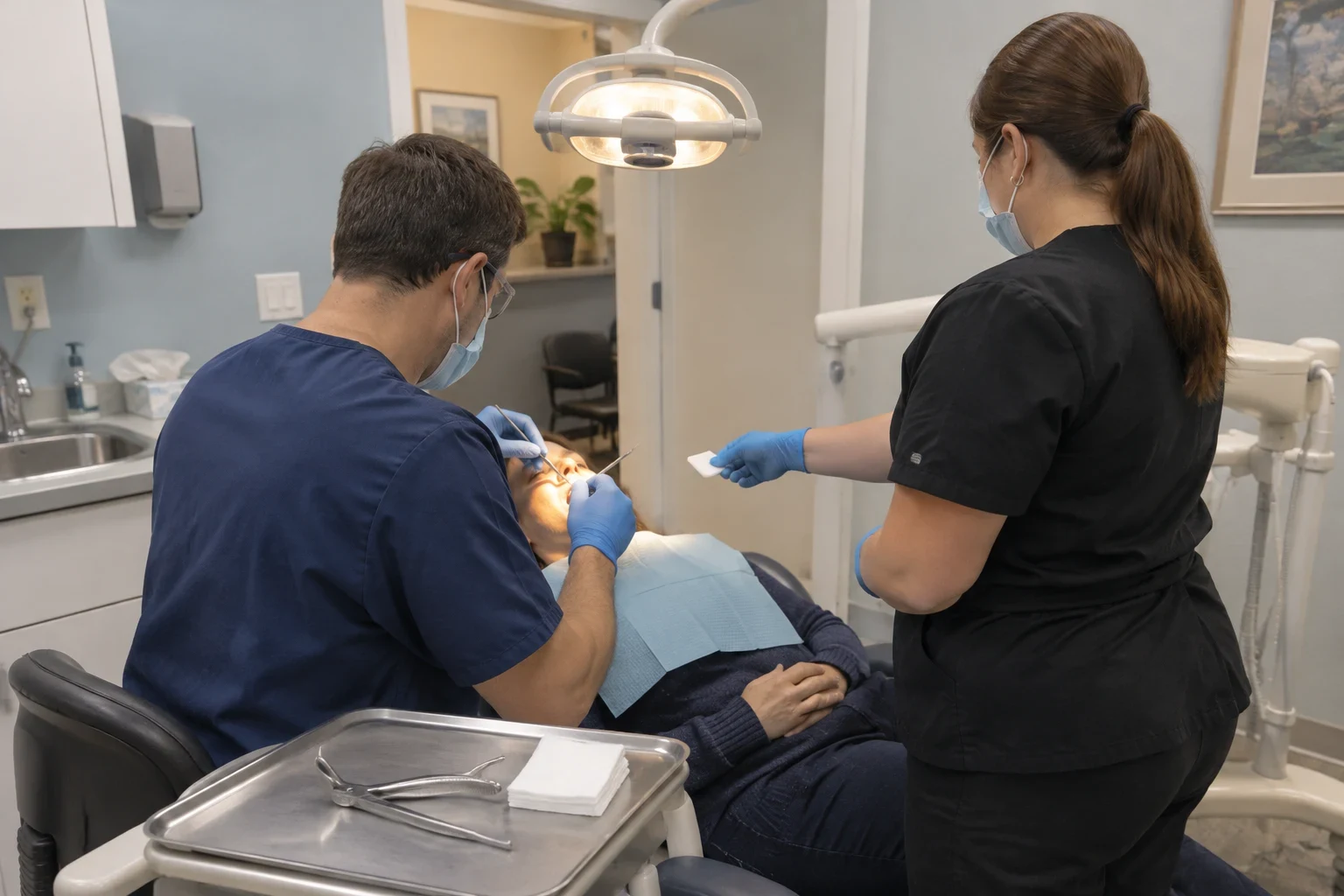
When removing a tooth makes sense
Our first goal is keeping your natural tooth. A lot of damage can be handled with a filling or a crown. But some teeth are too far gone: split down into the root, rotted past the point of repair, loosened by bone loss, or lying sideways in the jaw, as wisdom teeth often do. Keeping a tooth like that tends to bring more pain and a wider infection down the road.
Taking the tooth out is one choice. Deciding what happens to the space is the second. A gap in the back of the mouth can often stay empty. A gap up front, or where a tooth was keeping its neighbors lined up, usually needs a plan. We talk that through at your first appointment so the extraction is one step in a full treatment plan, not a quick fix on its own.
What your extraction visit includes
Exam and X-ray
We image the tooth to see the root shape, how close it sits to nerves or the sinus, and how much bone holds it. That tells us whether it is a simple removal or a surgical one.
Numbing that works
We numb the area fully and check it before we touch the tooth. You will feel pressure, not sharp pain. If you are anxious, tell us when you book and we will talk through comfort options.
Simple or surgical removal
A tooth that is fully up and in one piece is usually loosened and lifted out. A broken or impacted tooth may need a small opening in the gum or to be removed in sections, which is gentler on the bone.
Stitches and gauze
Most sockets get dissolving stitches that break down on their own in a week or two, so there is nothing to remove. You leave biting on gauze to help a good clot form.
Written aftercare
You go home with plain instructions for the first few days: what to eat, how to rinse, and what is normal swelling versus something to call us about.

When a tooth may be ready to come out
- A split that reaches the root
- Once a crack travels down into the root, it usually can't be sealed. You often feel a sharp jolt when you bite down and let go, and it gets worse over time.
- Gum swelling or a small sore
- A tender lump on the gum, or a puffy cheek or jaw, can point to infection at the tip of the root. Some of these teeth can be treated and kept, some can't. An exam sorts that out.
- Wisdom teeth that keep flaring up
- When a wisdom tooth only partly breaks through, food gets packed under the gum flap and it gets sore again and again. One coming in sideways can press on the molar next to it.
- Movement in an adult tooth
- Grown-up teeth should stay put. If one wiggles, the bone holding the root has often shrunk.
- Too little tooth left
- When decay has eaten away so much that a filling or crown has nothing solid to hold onto, taking the tooth out can be the better choice.
How the day goes
- 1
Check-in and a quick review
We look at your X-ray with you, confirm which tooth comes out and answer last questions. You can still change your mind at this point.
- 2
Numbing and waiting
We numb the area and give it time to take full effect. We test it before starting.
- 3
Removing the tooth
Most simple extractions take a short time once you are numb. Surgical ones take longer. We tell you what we are doing as we go so nothing comes as a surprise.
- 4
Closing and going home
We place stitches if needed, pack gauze and review aftercare. Plan on a quiet rest of the day, cool soft foods and no straws or smoking for a few days so the clot stays put.
What changes the price of an extraction
You get the number at your exam, before we start anything. We accept most dental insurance plans, and many of them pay part of an extraction. No insurance? Ask about our Office Dental Plan, or use the CareCredit Patient Payment Plan to pay over time.
- Straightforward or surgical
- A whole tooth that is fully above the gum comes out faster and costs less. A tooth snapped at the gum line, stuck in the bone or taken out in pieces takes more time and more steps.
- Where the tooth sits
- Front teeth usually have a single root. Molars have two or three, and they can curve, so the work is slower and more careful.
- Number of teeth
- Taking out several teeth at once, such as all four wisdom teeth, gives a different total than a single tooth.
- Infection and imaging
- If the tooth is actively infected, we may need to calm that down before removal. If we have no recent X-rays on file, new ones are part of the bill.
- Replacing the tooth
- Leaving the space open costs nothing more. A bridge does, and the material changes the price: porcelain and zirconia each have their own cost and trade-offs. Our Crowns & Bridges page explains them, and we walk through it at your visit.
Common questions about extractions
- Will it hurt when the tooth comes out?
- Once the area is numb, the removal should not be painful. Expect firm pressure and some rocking. The spot is usually sore for a few days, and over-the-counter pain relievers taken the way we explain handle it for most patients.
- When can I go back to normal food?
- For the first couple of days, eat soft, cool things like yogurt, eggs or soup that is not hot, and keep chewing away from the socket. By about a week, most patients are eating their usual meals. Avoid straws and hot drinks at first so the clot stays in place.
- What does dry socket mean?
- The blood clot that fills the empty socket can come out too soon and leave the bone bare. That brings a deep, throbbing ache two to four days after the visit. Sticking to your aftercare sheet cuts the chances a lot, and if it does happen, we treat it at the office.
- Should the missing tooth be replaced?
- It depends on the tooth. Losing a back molar is sometimes no problem at all. Other times the teeth next to it slowly tip into the space, and a missing front tooth changes how you smile and talk. We give you a plain answer and explain which materials would suit your mouth.
- Do you pull baby teeth for kids?
- Yes. A baby tooth may need to come out early if it is badly decayed or if the adult tooth is pushing in behind it. We go slow and tell your child what is happening in simple words. You can read more on our Kids' Dentistry page.
Find out what that tooth needs
Give us a ring, describe the pain or the break, and we will set up an exam. By the end of it you will know if the tooth can stay, and if it can't, how removal and healing will go.