ServicesTeeth Whitening
Teeth Whitening in Millbury
We whiten teeth two ways: a stronger gel applied in our chair, or custom trays with a gentler gel you wear over a couple of weeks. We look at your teeth first, tell you what will change and what won't, then you pick.
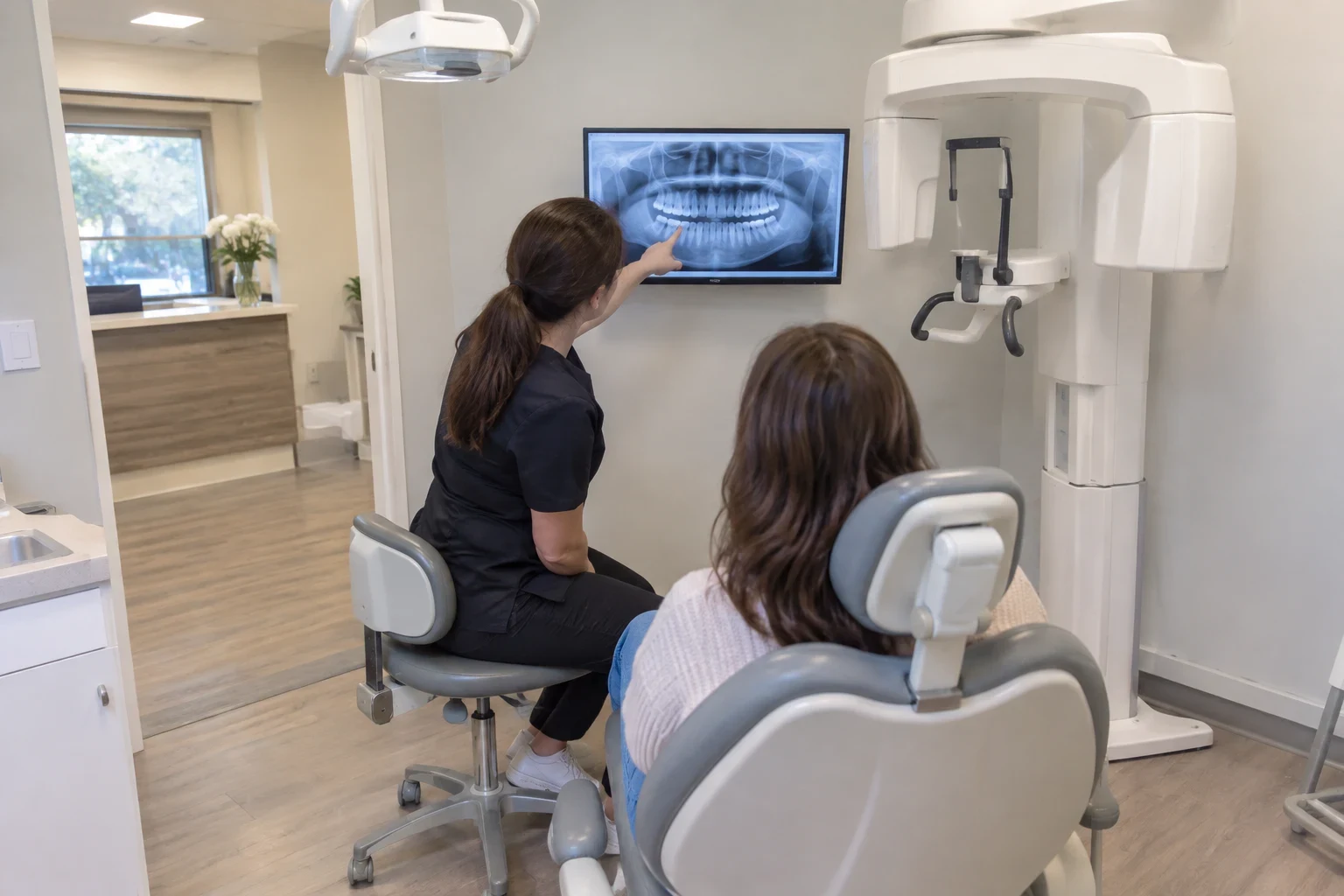
Two ways to whiten, and how they differ
Every whitening gel works the same basic way. A peroxide soaks into the enamel and breaks up the stain molecules underneath. What changes is how strong the gel is and how long it sits on your teeth.
In-office whitening uses a high-strength hydrogen peroxide gel. We protect your gums, apply it in rounds, and you leave the same visit with a lighter shade. Tray whitening uses carbamide peroxide, which releases hydrogen peroxide slowly. It's milder, so it takes longer, but many patients with sensitive teeth find it more comfortable.
One thing to know up front. Peroxide only works on natural enamel. Crowns, bridges, tooth-colored fillings and bonding keep the shade they were made in. If you have those on front teeth, we plan around them before you start.
What your whitening visit includes
A check before any gel
We look for cavities, worn enamel, exposed roots and gum irritation. Peroxide on an open cavity hurts, so problems get fixed first.
Shade record
We note your starting shade with a shade guide and photos. That way you can see the change instead of guessing.
In-office treatment
Cheeks and lips are held back, gums get a protective barrier, and the gel goes on in timed rounds. Most visits run about an hour to an hour and a half.
Custom trays
If you go with trays, we take impressions and make trays shaped to your teeth. A snug fit keeps the gel on enamel and off your gums. You get the gel and clear instructions on how long to wear them.
Plan for existing dental work
If you have crowns or fillings that show when you smile, we talk about whether to match them later with new work or whiten to their shade.
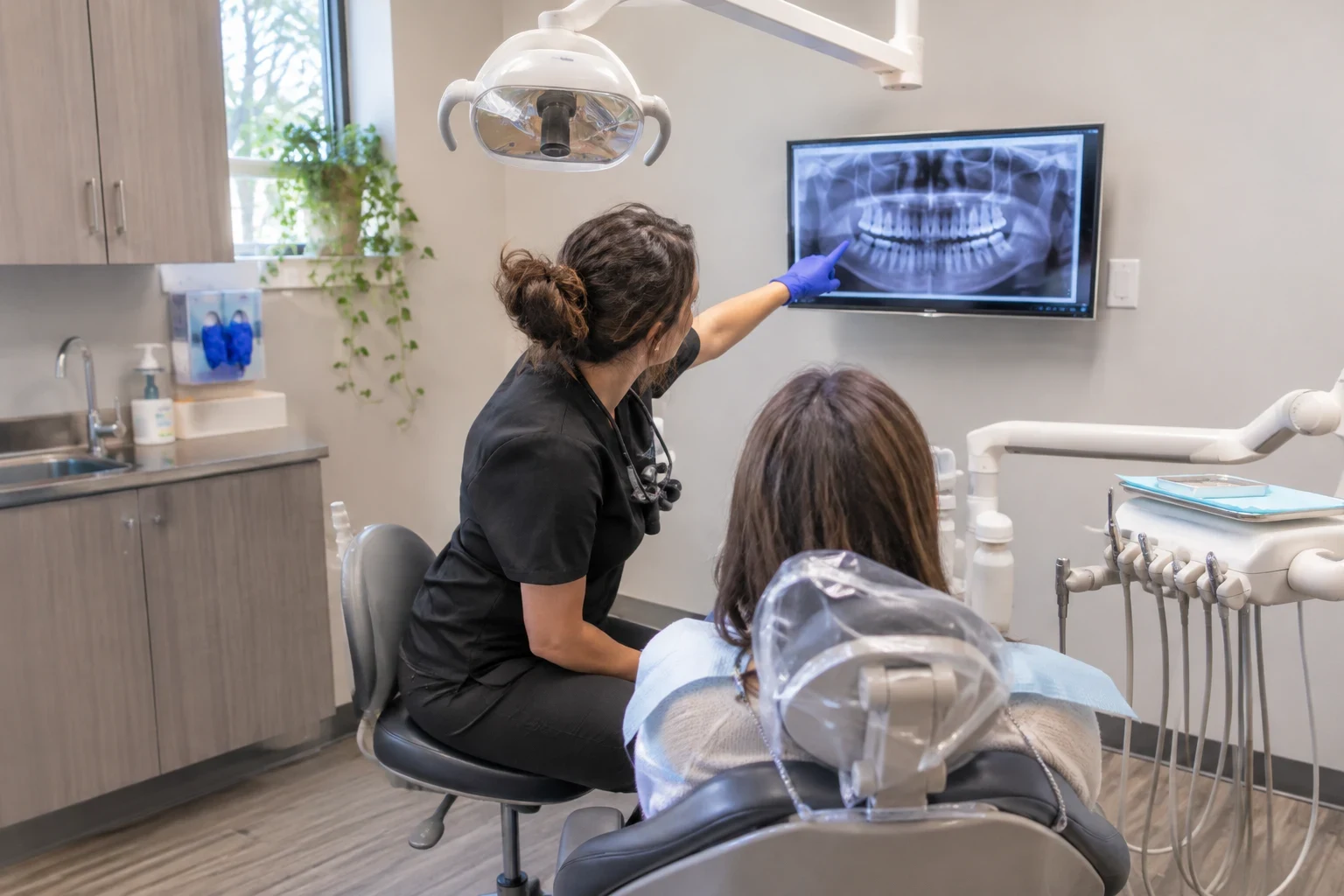
Signs whitening could help
- Yellow or brown surface stains
- Coffee, tea, red wine and tobacco leave yellow and brown staining. These usually respond well to peroxide.
- Teeth darkened with age
- Enamel thins over time and the darker layer underneath shows through more. Whitening can lighten that a fair amount.
- Your cleaning didn't lift the color
- A cleaning removes stain sitting on the surface. If your teeth still look dull after one, the stain is inside the enamel, and that's what whitening reaches.
- Gray or banded staining
- Gray stains from certain childhood medicines or from fluoride spots are harder to move. Whitening may help some, but we'll tell you honestly if crowns or bonding would do more.
How it goes, start to finish
- 1
Exam and shade check
We look over your teeth and gums and record your current shade. If you haven't had a cleaning lately, we may suggest one first so the gel reaches clean enamel.
- 2
Pick in-office or trays
We go over what each one feels like and how long it takes. Some patients do one in-office session and use trays afterward to keep the shade up.
- 3
Treatment
In the chair, the gel goes on in rounds with your gums covered. For trays, you wear them on the schedule we give you, usually for about two weeks.
- 4
The first couple of days
Freshly whitened teeth pick up stain more easily for a day or two. Go easy on coffee, tea, red wine and dark sauces. Some patients feel short zings of sensitivity. That fades, and a sensitivity toothpaste helps.
What affects the cost
Whitening is usually treated as cosmetic, so most dental insurance plans don't cover it. We accept most dental insurance plans for the exam and any work needed before whitening. We'll go over the cost of the option you pick before we start.
- In-office or trays
- In-office whitening uses more chair time and a stronger gel. Trays cost less per session but take longer.
- Work needed first
- Cavities, gum irritation or a cleaning may need to happen before whitening. That adds to the overall treatment plan.
- Stain type
- Deep or gray stains can take more sessions or extra gel, or may point toward a different fix entirely.
- Paying without insurance
- Patients without insurance can look at our Office Dental Plan. We also offer the CareCredit Patient Payment Plan if you'd like to spread out the cost.
Teeth whitening questions
- Will whitening make my teeth sensitive?
- It can, for a few days. Peroxide opens tiny pores in the enamel, and that can cause short sharp twinges. It goes away on its own. If you already have sensitive teeth, trays with a milder gel are often the easier route.
- How long do the results last?
- Usually a year or more, depending on what you eat and drink. Coffee, tea, red wine and smoking bring stain back faster. Keeping your trays lets you do a short touch-up when you need it.
- Is it safe for my enamel?
- Used as directed, peroxide whitening doesn't damage healthy enamel. Problems come from overuse or from gel sitting on gums. That's why we check your teeth first and fit trays to keep the gel where it belongs.
- Why not just use store-bought strips?
- Strips can help a little. They don't fit your teeth, so the gel coverage is uneven and it often gets on your gums. They also can't tell you a stain is coming from a dying nerve or an old filling, and we can.
- Can my teenager get their teeth whitened?
- We usually wait until all the adult teeth are in and the nerves have settled, often the mid to late teens. We'll look at your child's teeth and tell you whether it makes sense yet.
Ready for a lighter shade?
We'll check your teeth, explain in-office and tray whitening side by side, and help you pick. Patients come to us from Millbury, Grafton, Auburn and nearby towns.